
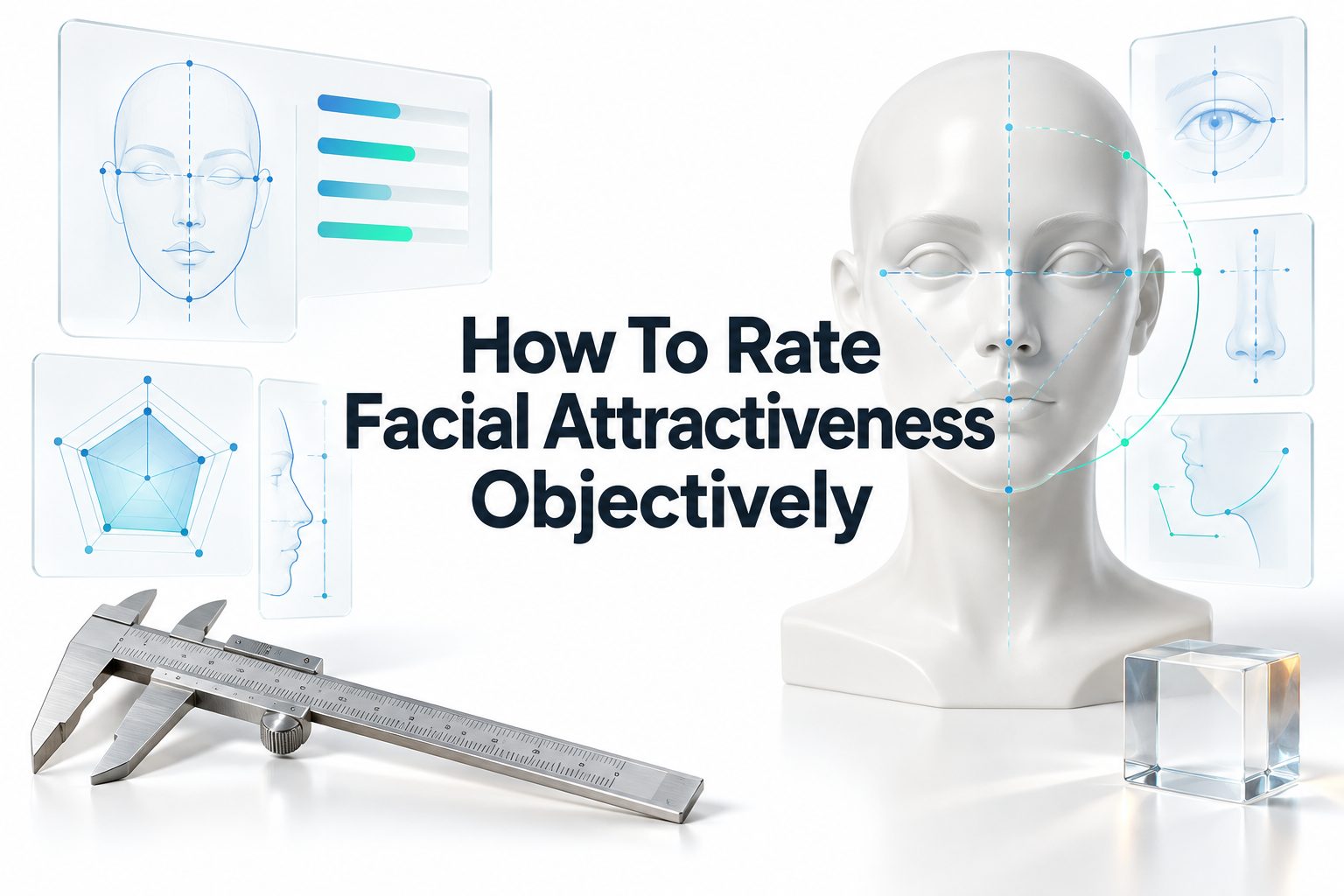
Facial attractiveness is partly subjective, but that does not mean every judgment is random. People often notice similar visual qualities: balance between features, healthy-looking skin, clear expression, and proportions that fit the face as a whole. Learning how to rate facial attractiveness objectively means separating these repeatable observations from personal taste, cultural preferences, and harsh self-criticism. It is not about assigning someone’s worth a number or chasing an unrealistic beauty standard. It is about using a fair framework to assess visible facial traits consistently.
A useful assessment looks at several features together instead of fixating on one perceived flaw. This article explains the facial factors that tend to influence first impressions, a practical scoring method, common errors that distort ratings, and the limits of using any attractiveness scale. By the end, you will be able to evaluate a face more thoughtfully, compare photos more fairly, and recognize when a rating says more about lighting or bias than appearance.
What Objective Facial Attractiveness Means
An objective rating does not mean a perfect, universal verdict. It means using defined criteria and applying them consistently. For example, you can compare facial symmetry, feature harmony, skin condition, and expression without claiming that one person is inherently more valuable than another.
Attractiveness research often finds broad agreement on certain visual signals, especially in rapid first impressions. Yet agreement is never complete. Culture, age, style, familiarity, personality, and individual preferences all affect what people find appealing, so objectivity should be treated as a structured estimate rather than a fact.
Why Single-Feature Judgments Fail
A prominent nose, uneven eyebrows, small eyes, or a strong jawline can stand out in isolation. In real life, though, people usually perceive the face as a complete pattern. A distinctive feature may add character and still work well with the person’s proportions.
Judging one feature at a time also encourages unnecessary criticism. A face with minor asymmetry can appear highly attractive because the skin, smile, proportions, and overall presence create a cohesive impression. The relationship between features matters more than technical perfection.
Key Principles for a Fair Assessment
- Rate the whole face before examining details.
- Use clear, current photos with neutral lighting when possible.
- Compare similar poses, expressions, and image quality.
- Treat symmetry as one factor, not the final score.
- Separate health and grooming from fixed facial structure.
- Avoid making conclusions from one selfie or a heavily filtered image.
Facial Symmetry and Balance
Symmetry refers to how closely the left and right sides of a face resemble each other. Near symmetry is often associated with attractiveness because it can suggest stable development and visual balance. Still, perfectly mirrored faces may look artificial, and almost everyone has visible asymmetries.
A more useful concept is balance. Look at whether the eyes sit at similar heights, whether the nose appears centered relative to the mouth, and whether the jaw and cheek areas feel proportionate. Small differences are normal and usually become less noticeable when the person is smiling or moving.
Facial Proportions and Feature Harmony
Proportions concern the size and placement of features relative to the rest of the face. Common observations include the spacing between the eyes, the relation of nose length to facial length, and the size of the lips in relation to the lower face. These relationships influence visual harmony.
There is no single ideal proportion that suits every face. The often-cited “golden ratio” is not a reliable beauty formula, and forcing real faces into rigid measurements can be misleading. Instead, assess whether the features look coordinated rather than unusually crowded, compressed, or disproportionate in the image.
The Three Facial Thirds
When viewed from the front, the face can be roughly divided into upper, middle, and lower thirds. The upper third runs from the hairline to the brows, the middle from brows to the base of the nose, and the lower from the nose base to the chin.
These sections do not need to be identical. They simply provide a reference for noticing substantial imbalance. Hairline, camera angle, facial expression, and individual anatomy can all alter how these thirds appear, so use this as a visual guide rather than a strict measurement.
A Practical Feature Comparison
| Facial area | What to observe | Avoid overvaluing |
|—|—|—|
| Eyes and brows | Alignment, spacing, alertness, brow framing | Tiny height differences |
| Nose | Centering, width, fit with the face | One profile photo |
| Lips and smile | Shape, proportionality, warmth of expression | A neutral resting expression |
| Cheeks and jaw | Definition, width, transition to chin | Temporary weight changes |
| Skin | Evenness, clarity, healthy appearance | Normal texture and pores |
Skin Quality, Grooming, and Presentation
Skin is one of the first elements people notice because it covers a large portion of the face. Even tone, hydration, and a healthy appearance tend to improve perceived attractiveness. This does not require flawless skin; normal pores, freckles, scars, and occasional blemishes are part of real human appearance.
Grooming can strongly affect a rating because it changes framing and contrast. Hair shape, eyebrow maintenance, facial hair, skincare, makeup, and clothing color may make features appear more balanced. If you want to assess natural facial structure, note presentation separately rather than letting it dominate the score.
Expression and Perceived Attractiveness
A relaxed, genuine expression can make a larger difference than many people expect. A natural smile often lifts the cheeks, softens the eyes, and signals approachability. In contrast, a tense expression, squinting, or forced pose can make an attractive person photograph poorly.
Expression is not a permanent facial trait, so it should not be confused with structure. When rating a photo, consider both the neutral face and the impression created by expression. For social or dating contexts, the latter often matters more because people respond to the overall emotional signal.
A Simple Five-Category Rating Method
Use a scale from 1 to 10 for each category, then calculate the average. The goal is consistency, not precision down to a decimal point.
1. Rate overall facial balance before zooming into details.
2. Rate proportion and feature harmony.
3. Rate skin appearance and visible signs of health.
4. Rate grooming and photo presentation separately.
5. Rate expression, warmth, and approachability.
6. Average the categories and write a brief note explaining the result.
For example, a person may score highly for expression and grooming but more moderately for image symmetry. That result gives a clearer, kinder picture than declaring the person simply “attractive” or “unattractive” based on a quick glance.
How to Use Photos Without Misleading Yourself
Photo-based ratings are inherently limited. A phone camera held close to the face can enlarge the nose and central features. Wide-angle lenses distort proportions, while portrait modes, filters, and image editing can reshape skin and facial contours.
For a fairer comparison, use a front-facing photo taken at eye level in indirect daylight, with the camera positioned farther away and slightly zoomed in. Include a neutral expression and a natural smile. Reviewing several images is far more reliable than judging one unflattering frame.
Angles, Lighting, and Lens Effects
Overhead lighting can emphasize under-eye shadows, while lighting from below can create an unnatural look. Side lighting may sharpen the jawline and cheekbones but can also exaggerate texture or asymmetry. Soft, even light generally produces the most representative image.
Camera position matters just as much. A low camera angle can make the lower face appear larger, while a high angle can enlarge the eyes and reduce the jaw. If you are comparing progress photos or different people, use matching conditions whenever possible.
When Video Gives Better Context
Video can offer a more realistic impression because it shows facial movement, posture, expression changes, and how features work together. Some faces are especially photogenic, while others become much more engaging in motion. A still image cannot fully capture either effect.
Use video carefully, though. Movement introduces new variables such as voice, confidence, body language, and social charisma. That makes it useful for judging overall appeal, but less useful if your goal is a narrow analysis of facial structure alone.
Common Mistakes That Make Ratings Less Accurate
- Treating social media filters as real facial proportions.
- Comparing a casual selfie with a professionally lit portrait.
- Giving one feature too much weight.
- Assuming conventional beauty is the only kind of beauty.
- Rating someone while influenced by attraction, dislike, jealousy, or familiarity.
- Ignoring age, style, expression, and cultural context.
- Using a score as a judgment of personality or personal worth.
The Role of Cultural Preferences and Personal Taste
Broad patterns exist, but cultural preferences influence attractiveness standards. Some communities may value softer facial contours, while others favor sharper bone structure. Preferences around skin tone, facial hair, makeup, eyebrow shape, and youthful or mature features also change across places and time periods.
Personal taste matters too. One viewer may prefer expressive eyes and softer features, while another is drawn to strong brows and a defined jaw. A responsible rating distinguishes between “this fits common visual preferences” and “this is what I personally find attractive.”
Attractiveness Versus Distinctiveness
Conventional attractiveness often relates to balance, health cues, and familiar proportions. Distinctiveness is different: it comes from memorable features, unusual coloring, a striking profile, or expressive character. A face can be highly distinctive without matching conventional beauty ideals.
In photography, fashion, entertainment, and everyday social life, distinctiveness can be an advantage. People often remember a face with character more easily than one that is technically symmetrical but visually generic. This is why a numerical score should never be the only measure of appeal.
Social Context Changes Perception
The same face may be judged differently in a professional headshot, a candid group photo, a dating profile, or a fashion editorial. Context changes the viewer’s expectations and changes which traits are most visible. A friendly expression can matter more in one setting than bone structure.
This is also why [Internal Link: how to choose flattering profile photos] can be useful alongside facial assessment. Choosing an accurate, well-lit image does not deceive viewers; it helps them see a more representative version of the person rather than an accidental bad angle.
Separating Facial Structure From Changeable Factors
Some traits are largely structural, including bone shape, feature placement, and natural facial proportions. Other factors are changeable: sleep, hydration, skincare, hairstyle, posture, facial hair, makeup, and expression. Mixing both categories together can make ratings less helpful.
If your goal is self-improvement, focus first on factors you can control. Better sleep may reduce puffiness, a haircut can improve facial framing, and skincare can improve texture and tone. These changes may affect first impressions more than obsessing over minor anatomical differences.
What Can Improve Facial Presentation
- Choose a hairstyle that frames your face shape.
- Keep eyebrows tidy while preserving their natural structure.
- Use sunscreen and a simple skincare routine consistently.
- Prioritize sleep, hydration, and nutrition for healthier-looking skin.
- Practice relaxed posture and natural expressions for photos.
- Select clothing colors that complement your skin tone.
- Use [Internal Link: practical grooming tips for men and women] to build a routine that fits your style.
What a Rating Cannot Tell You
A facial attractiveness score cannot predict kindness, intelligence, confidence, compatibility, talent, or long-term appeal. It also cannot fully account for voice, humor, movement, personal style, or the way someone makes others feel in conversation.
Scores can be especially unhelpful when used compulsively. Rechecking mirrors, repeatedly comparing selfies, or asking strangers for blunt feedback may worsen insecurity without providing useful insight. If appearance concerns are causing distress or interfering with daily life, it may be more helpful to speak with a qualified mental health professional.
Using Feedback Constructively
When asking others for feedback, request specific observations instead of a blunt overall rating. Ask which photos look most natural, whether a hairstyle suits your face, or whether your expression appears approachable. Specific feedback is easier to evaluate and act on.
Choose feedback sources carefully. Trusted friends, experienced photographers, stylists, or grooming professionals are often more useful than anonymous commenters. They can identify practical improvements without reducing a complex person to a ranking.
A Better Way to Frame Self-Assessment
Instead of asking, “What number am I,” ask, “What presentation shows me accurately and confidently?” This shift encourages useful decisions about photos, grooming, and self-care. It also reduces the temptation to chase artificial perfection.
A balanced self-assessment recognizes both strengths and ordinary imperfections. Most appealing faces are not mathematically perfect. They look alive, healthy, expressive, and coherent. Confidence tends to grow when appearance is treated as one part of self-presentation rather than a permanent verdict.
Conclusion
The most reliable way to rate facial attractiveness is to look for overall balance rather than hunt for flaws. Consider symmetry, proportion, skin quality, grooming, expression, and the quality of the image itself. Give each factor a sensible amount of weight, and remember that a camera lens or difficult lighting can change the result dramatically.
Learning how to rate facial attractiveness objectively can be useful when choosing photos, refining personal style, or making sense of feedback. It becomes less useful when a score turns into an obsession or a measure of human value. A thoughtful assessment should identify what is already working, separate fixed features from changeable presentation choices, and leave room for individual taste. The best outcome is not a supposedly perfect number. It is a clearer, more realistic view of how a face is perceived and how it can be presented with confidence.
Frequently Asked Questions
Can facial attractiveness be measured objectively
Partly. You can assess symmetry, proportions, skin appearance, grooming, and expression with consistent criteria. No score is fully objective because culture, personal preferences, context, and emotional reactions still influence how each viewer responds.
Is facial symmetry the most important factor
No. Symmetry contributes to visual balance, but it is only one factor. Feature harmony, healthy-looking skin, expression, grooming, and overall presence often have just as much influence on perceived attractiveness.
Do phone cameras distort facial attractiveness
Yes. Close selfies, wide-angle lenses, and poor lighting can noticeably alter perceived proportions. Taking photos at eye level from farther away in soft, even light usually creates a more accurate representation.
Can grooming improve an attractiveness rating
Yes. Hair, brows, skincare, facial hair, makeup, and clothing colors can improve facial framing and presentation. These changes do not alter bone structure, but they can strongly affect first impressions and photo quality.
Should you ask strangers to rate your face
Usually not. Anonymous ratings can be inconsistent, overly harsh, and emotionally unhelpful. Specific feedback from trusted people or professionals is more useful when you want advice about photos, style, grooming, or presentation.